My miniture waste oil heater

Design goal:
- Minimal parts / complexity
- Readily and easily salvageable materials
- Simple easy to service design
- Flexibility of application, So atm it will be used on a wood burning cook stove to heat the house, but it will be very easy to mount to a boiler (I prefer secondary exchange for comfort and safety)
Utilizing Air atomizing siphon nozzle for the heavy oil with a 0.5mm Nozzle @ 14.5psi gauge, Ideally should be a 0.2mm nozzle.
The 0.5mm Nozzle at 14.5psig should make apx a little over 20,000 btu/h
Goal is to not use preheating, to save some energy, so I am using a gasoline waste oil mix, now you may ask doesn't that defeat the point? Well 16L gas makes 64L of fuel and gas is cheaper then diesel and used oil is generally free (It costs you time and effort to get it, but with careful planing and asking around every time you do a trip!)
Parts purchased:
Oil primary control - New
Nozzle Assembly - New
Regulator gauge assembly - New
Currently got body assembled and a refractory target end of the burn chamber. So now it is down to fine tuning the fuel mixture and secondary air mixture
Issues:
Internal flame tube is too small diameter for the nozzle it is 4" how ever should been ideally 7", rest of dimensions scaled accordingly
Now rest will be pics with some explanation.
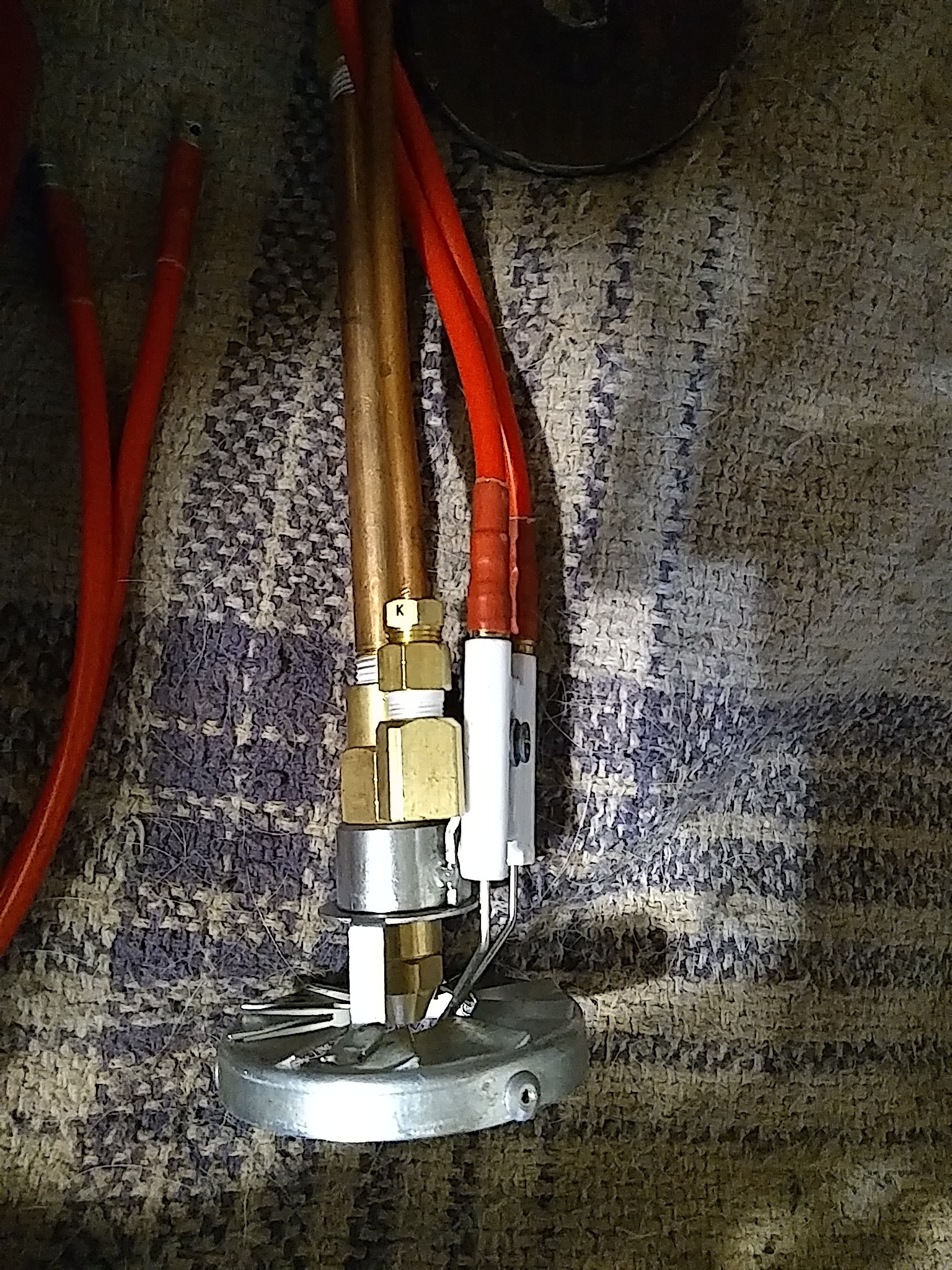
Nozzle assembly as ordered from Amazon dot Ca, I modified it by adding the rivets as a centering shim and slide to make it easier to insert to the flame tube
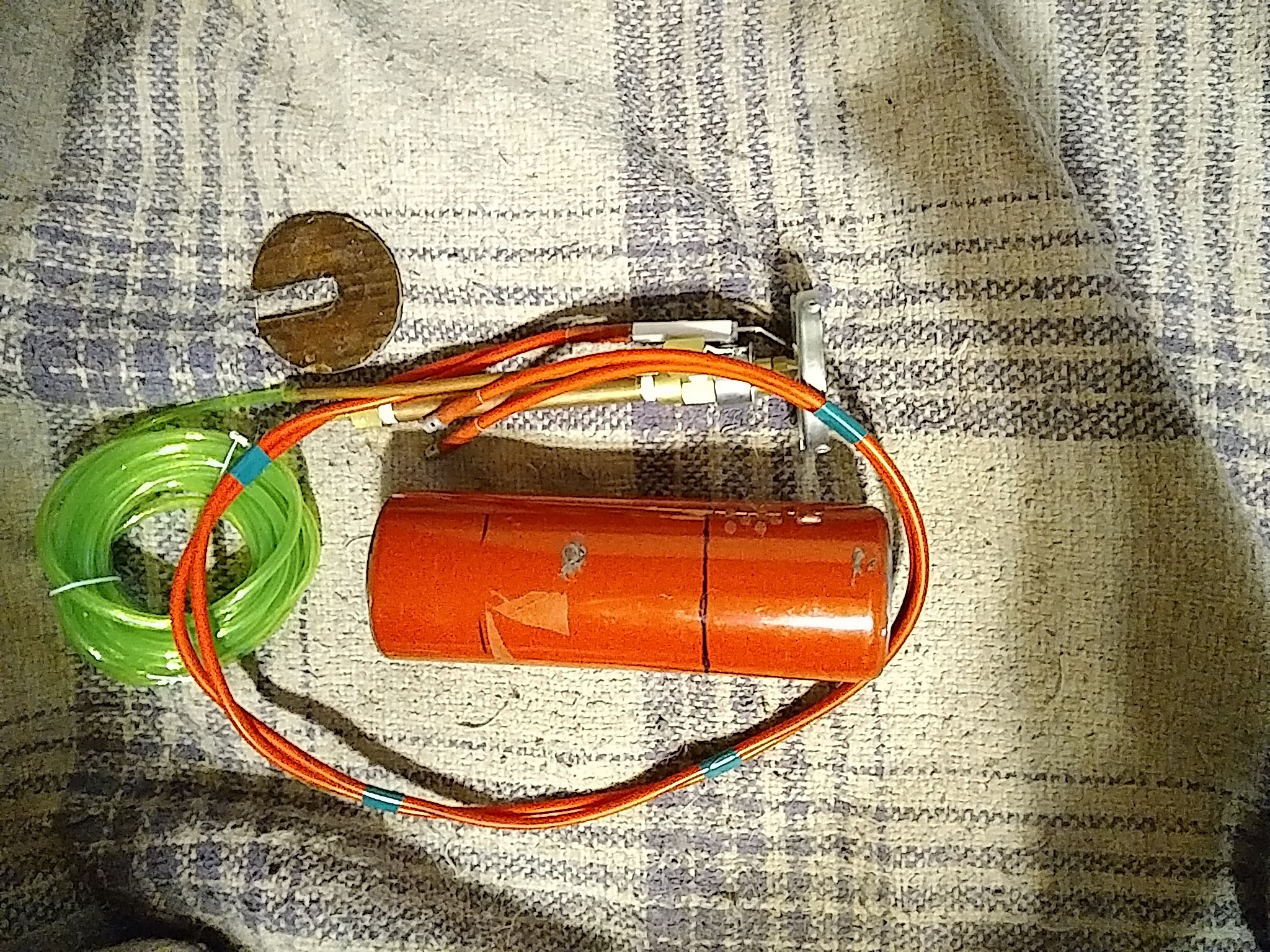
Flame tube marked out and cut from a old 2.5lbs Strike first fire extinguisher shell. A fiber glass impregnated cardboard backer plate to secure the tube center
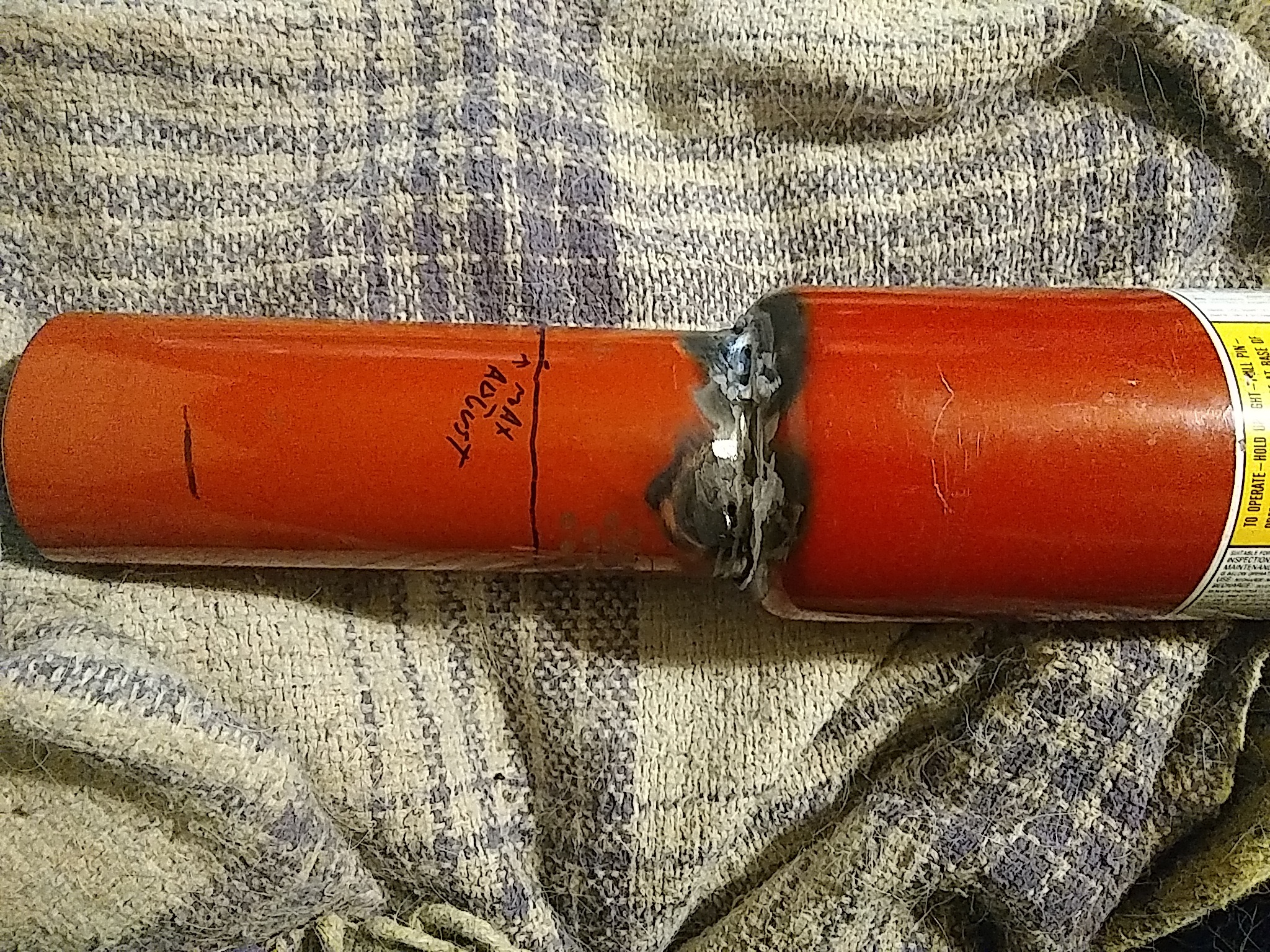
Flame tube welded to the fire tube (It's job is to ensure full combustion by vaporizing any larger droplets and guide the flame to the end of the outer chamber) that is the larger flange at the front from a 40lbs Amerex extinguisher shell, this will make clearer sense down the road. Yes I suck at stick welding, TIG been much more preferable for me!
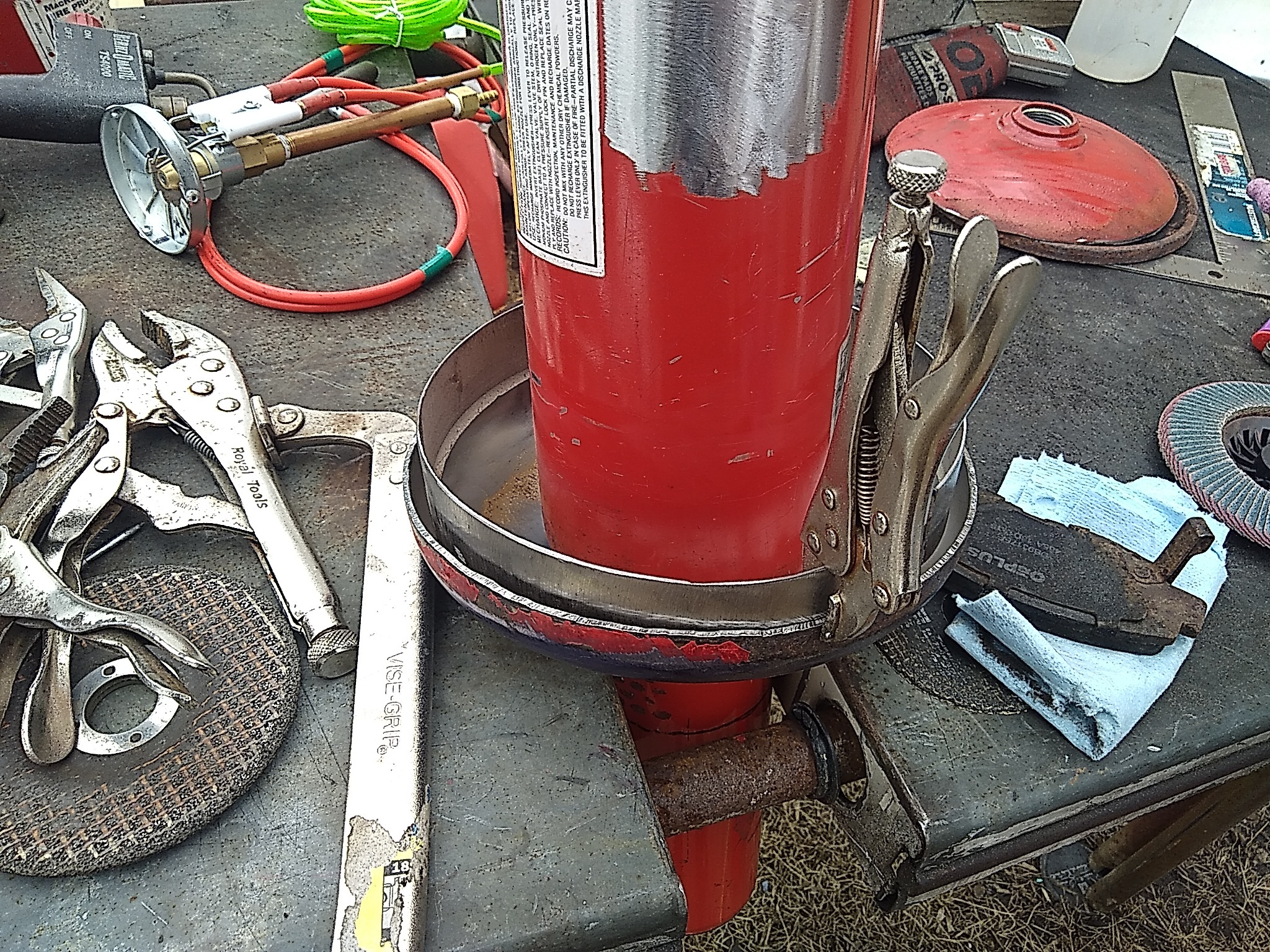
The burner assembly is the removable element to facilitate cleaning and repairs down the road, so welding on the flange to form the lap seal with the main heater body
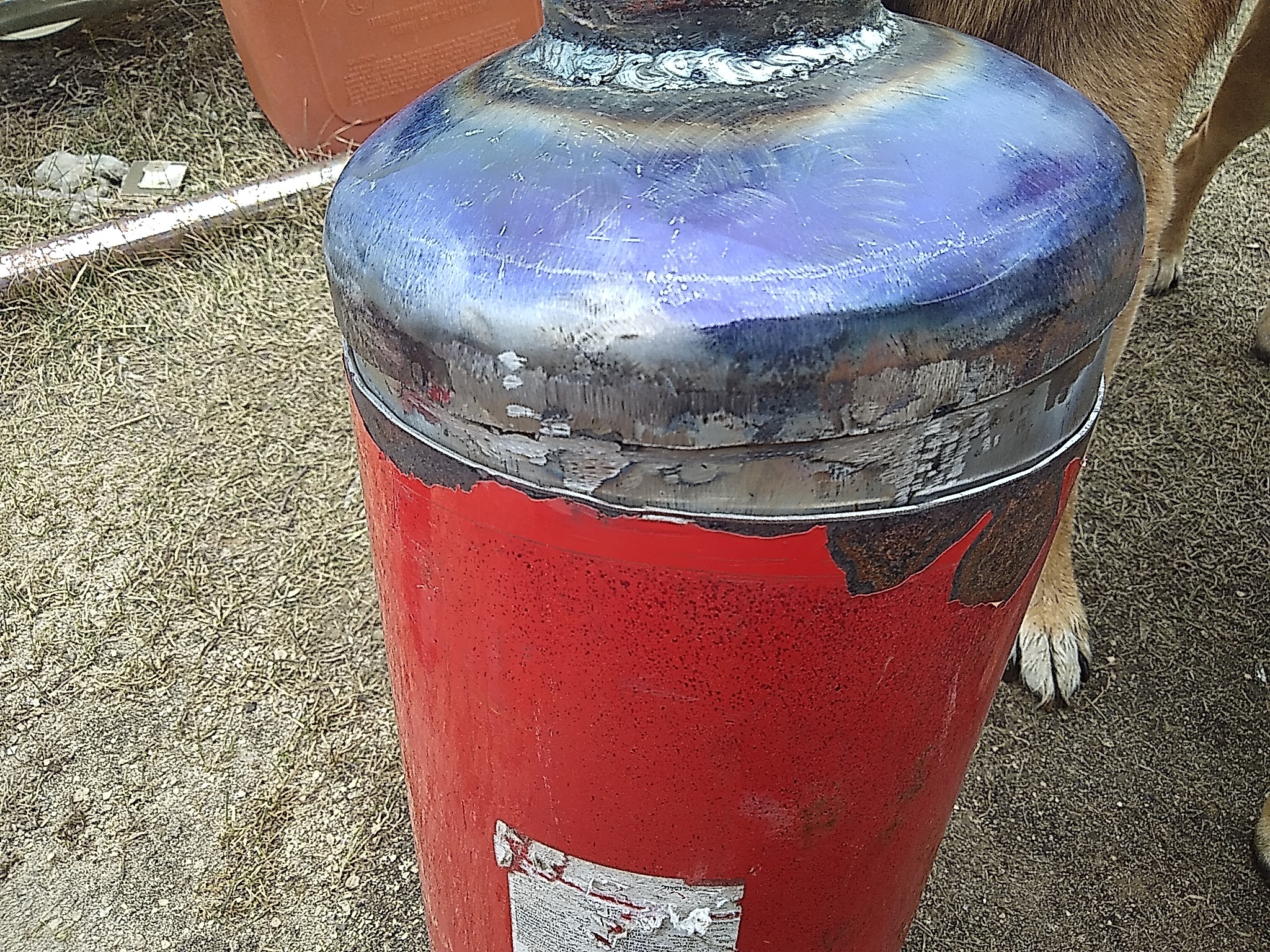
Test Fit
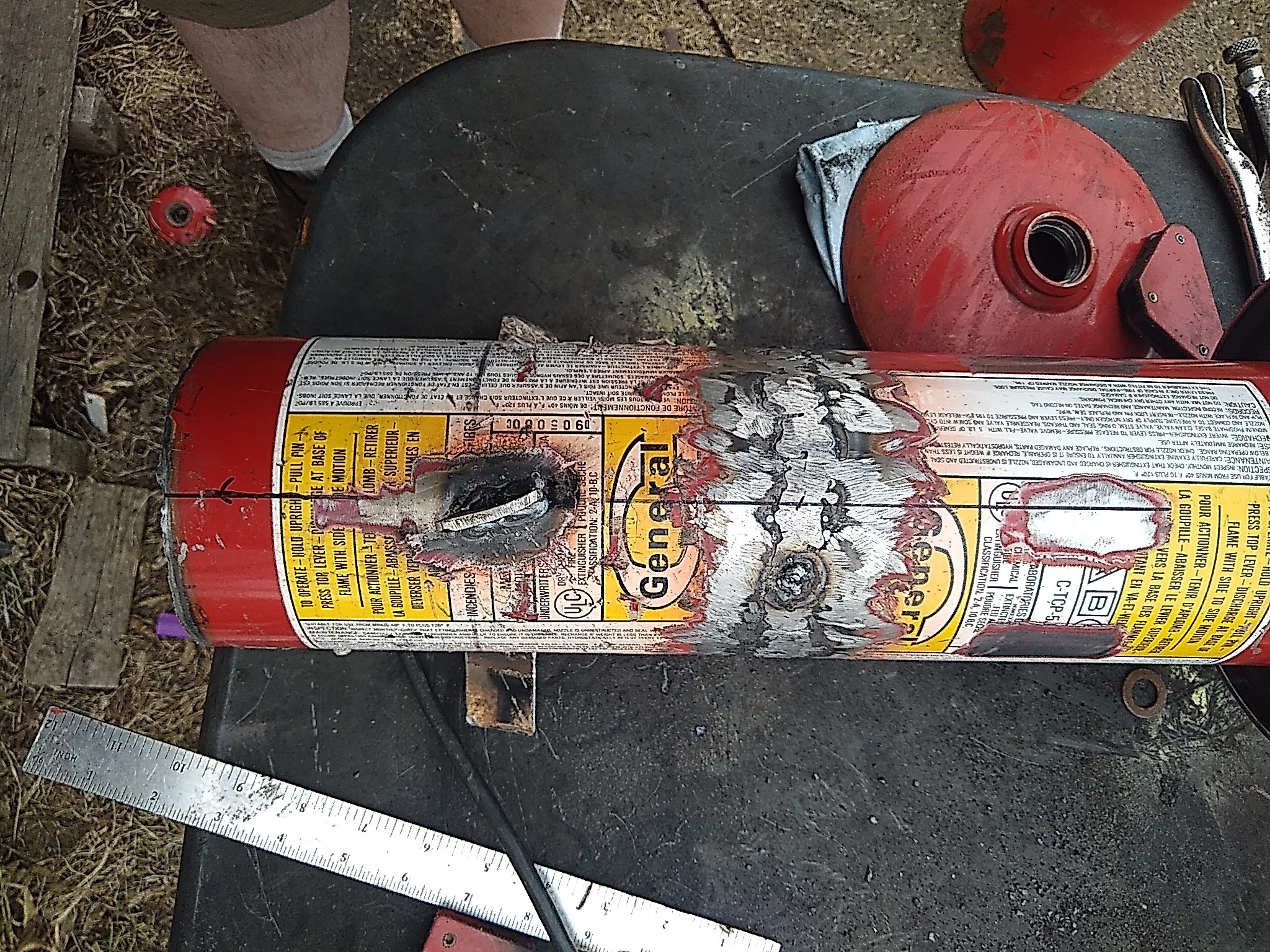
The fins serve 2 purposes, 1: is to center the tube in the main body, 2: to re-enforce the spin of the heated gasses to improve heat transfer
-Continues
 Topic: My miniture waste oil heater (Read 285 times)
previous topic - next topic
Topic: My miniture waste oil heater (Read 285 times)
previous topic - next topic